
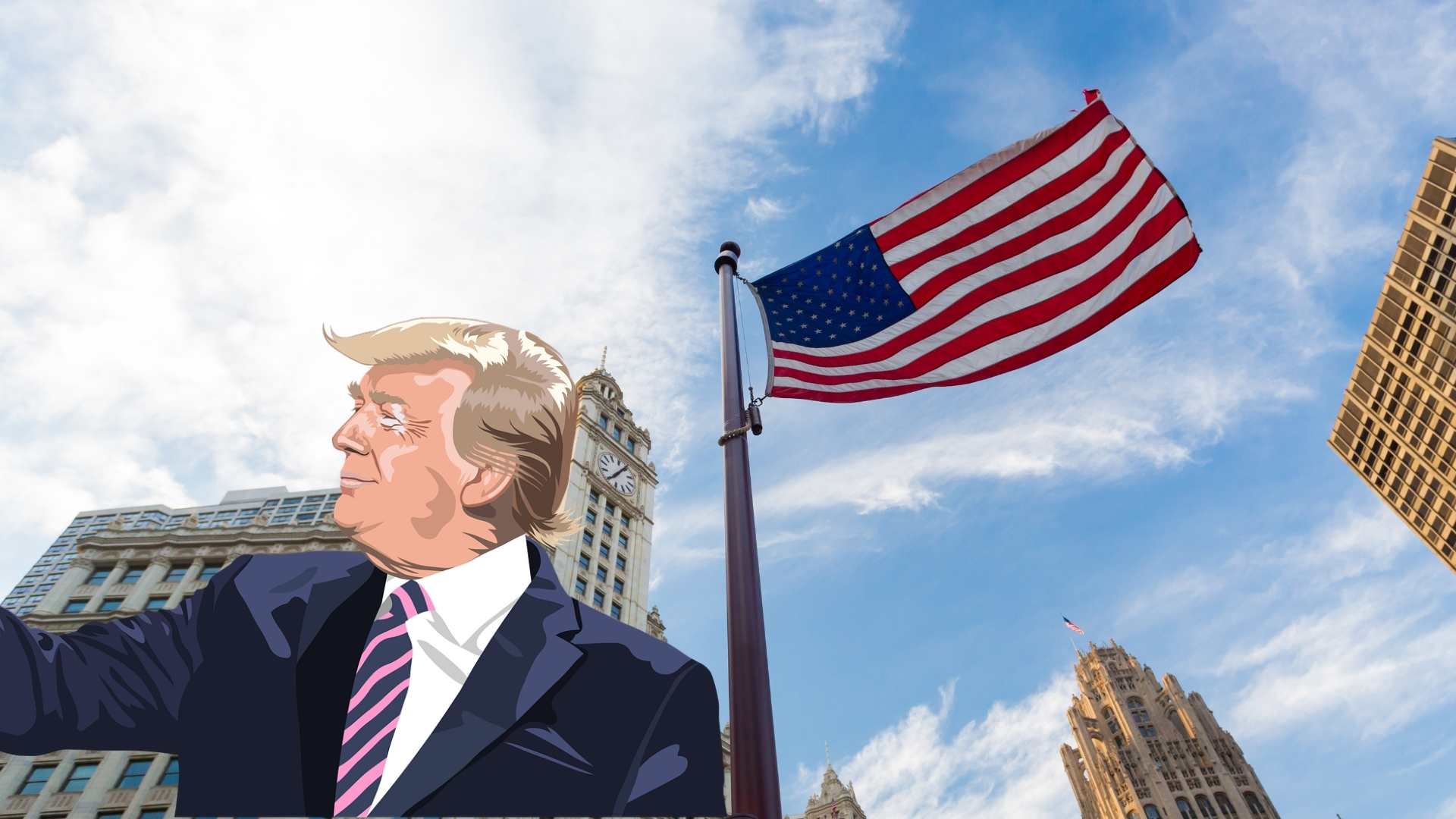
This Trump foreign policy world order shift has unsettled allies, forced rivals to recalculate, and shaken the rules-based international order.
The world has watched the United States reshape borders, regimes, and global rules many times before. Yet something feels unmistakably different today. It is not merely the scale of American power, but the bluntness with which it is exercised and explained. This Trump foreign policy world order shift has unsettled allies, forced rivals to recalculate, and shaken what is often described as the “rules-based international order.”
Under Donald Trump’s leadership, critics argue that Washington has moved beyond bending global norms and has begun openly discarding them—leaving the international system struggling to respond.
A Rulebook Torn Apart
For decades, US foreign policy followed a familiar script. Military interventions and regime-change operations were framed—at least publicly—in the language of international law: chemical weapons, human rights violations, dictatorship, or the protection of civilians. Even when these claims were later questioned or disproved, they provided diplomatic cover and moral justification for allies.
This time, many observers believe that even this pretense has been abandoned.
The seizure of a figure labeled by US authorities as a “drug lord,” who also happened to be the sitting president of a sovereign nation, crossed a psychological threshold. Critics see it not simply as an extraterritorial law-enforcement action, but as a direct challenge to national sovereignty itself. In their view, it signals that international law is no longer something to be interpreted or stretched—it can simply be ignored when it obstructs American interests.
From Drug Charges to Venezuela Oil Politics
What made this episode especially jarring was how quickly the narrative shifted. What began as criminal accusations soon evolved into openly transactional language. Trump’s own remarks referencing Venezuela oil interests left little room for doubt. There was no longer any need for speculation or conspiracy theories; the motivation was stated plainly, almost casually, as if access to resources were a routine function of power.
This openness is what sets the moment apart. During the Bush era, wars in Afghanistan and Iraq were justified through the War on Terror, weapons of mass destruction, and the promise of spreading democracy—claims that later unraveled or remained deeply contested. Under Bill Clinton, interventions in the Balkans were framed as humanitarian necessities, even as strategic interests quietly shaped outcomes. In each case, critics argue, power politics and resources were always part of the equation, but they were carefully wrapped in moral and legal language.
What feels different now is that the quiet part is no longer whispered. It is spoken aloud.
Europe’s Response to Trump’s Foreign Policy
Perhaps the most telling reaction has come from Europe—or the lack of one.
Once an active participant, and at times an enabler, of US military and political adventures, Europe today appears reduced to an observer: cautious, fragmented, and unsure how to respond to an America that no longer seeks consensus. Trump’s renewed rhetoric about acquiring Greenland briefly forced European leaders to respond. Danish Prime Minister Mette Frederiksen dismissed the idea as “absolutely absurd,” warning that even discussing such a move could strain NATO itself. Antonio Costa, President of the European Council, reaffirmed that Greenland belongs to its people and that no decisions about its future can be taken without their consent.
Beyond these statements, Europe’s response to broader US actions—particularly Trump’s framing of power around oil and resources—has been muted. Calls for restraint and respect for international law have replaced direct confrontation. This hesitation reflects Europe’s dilemma: it opposes violations of sovereignty in principle, yet remains wary of openly challenging Washington.
Muscle Flexing or a Strategic Masterstroke?
There is another way to interpret Trump’s actions.
With a single, aggressive move, he may have sent a clear signal that the United States still dominates the global system. China, one of the largest buyers of Venezuelan oil, was forced to reassess overnight. The speed at which capitals around the world paused and recalculated suggests that American power, despite years of predictions about its decline, still retains the ability to disrupt rivals instantly.
From this perspective, Trump may have temporarily slowed the transition toward a multipolar world order. That shift has not disappeared, but it appears more cautious. No major power rushed into direct confrontation. Everyone stepped back.
The uncomfortable question that follows is unavoidable: if the US can act this way, will China attempt something similar with Taiwan—and will the world respond differently? This question, however, deserves deeper examination elsewhere.
Shockwaves Across the Americas
Trump’s blunt admission—“we went there for oil”—has sent ripples across the region. South America is uneasy. Colombia watches with concern. Panama feels pressure. The fear is not ideological but practical. In a world where power is exercised purely on transactional terms, smaller nations understand how vulnerable they are.
For Trump, business appears to be the guiding principle—business defined strictly by what benefits the United States, regardless of precedent, perception, or long-term consequences.
India’s Calculated Silence
India has responded differently.
Despite repeated rhetorical and economic pressure, New Delhi has neither openly confronted nor visibly submitted. Instead, it has chosen strategic restraint—perhaps the one response most likely to frustrate a leader who thrives on dominance and attention.
Prime Minister Narendra Modi, a politician with over four decades of experience, understands power dynamics well. What some interpret as submission may instead be quiet assertiveness: a refusal to escalate, and a signal that India will not bend while avoiding unnecessary confrontation.
Is Trump Pushing the World Toward World War 3?
The central question remains unresolved: is Trump pushing the world toward World War 3, or executing a calculated—if dangerous—strategy to reassert American dominance?
So far, only Russia, China, and North Korea have openly resisted US pressure. Yet all three struggle with credibility when it comes to peaceful relations with their neighbors, limiting their ability to rally global support. Europe hesitates. India calculates. Much of the Global South watches with anxiety, unsure how to respond.
A Dangerous Precedent for the Global Order
What makes this moment especially unsettling is not American power itself, but the normalization of its unapologetic use. When sovereignty becomes negotiable and international law optional, the system designed to prevent chaos begins to erode.
Trump may believe he is securing his legacy as a leader who restored American strength. In the short term, he may even be right. History, however, suggests that dominance exercised without restraint rarely produces stability.
Whether this path leads to deterrence or disaster remains unclear. What is clear is that the world is watching—uneasy, cautious, and increasingly aware that the global map may once again be in the process of being redrawn.

Mr. Amit Singh has completed his B.Com from Delhi University and his M. Com from IGNOU, he is currently working in an MNC as finance manager. He Lives in Delhi. Big fan of Sachin Tenudulkar, love economics, accounts, dogs, food, books. He also like writing on several topics mostly finance and current affairs as it interest him the most. Love to make friends and love to have healthy discussions and debate on social platforms on several current affair or educational topics. He has 11 years of vast experience in finance and accounts field. He also investing in share market from last 10 years. You can share yours ideas, write or feedback to me on my official email id i.e amit@madforword.com